

Heat pump installation in Dayton & Cincinnati.
We set both the capacity and the backup heat from a heat-loss calculation on your house, so the system is built around your coldest nights rather than an average one. We will price a dual-fuel setup against a straight heat pump.
Right-sized, high-efficiency heat pumps installed clean and to code. Heat-loss sizing, backup heat configured at commissioning, and flexible financing.
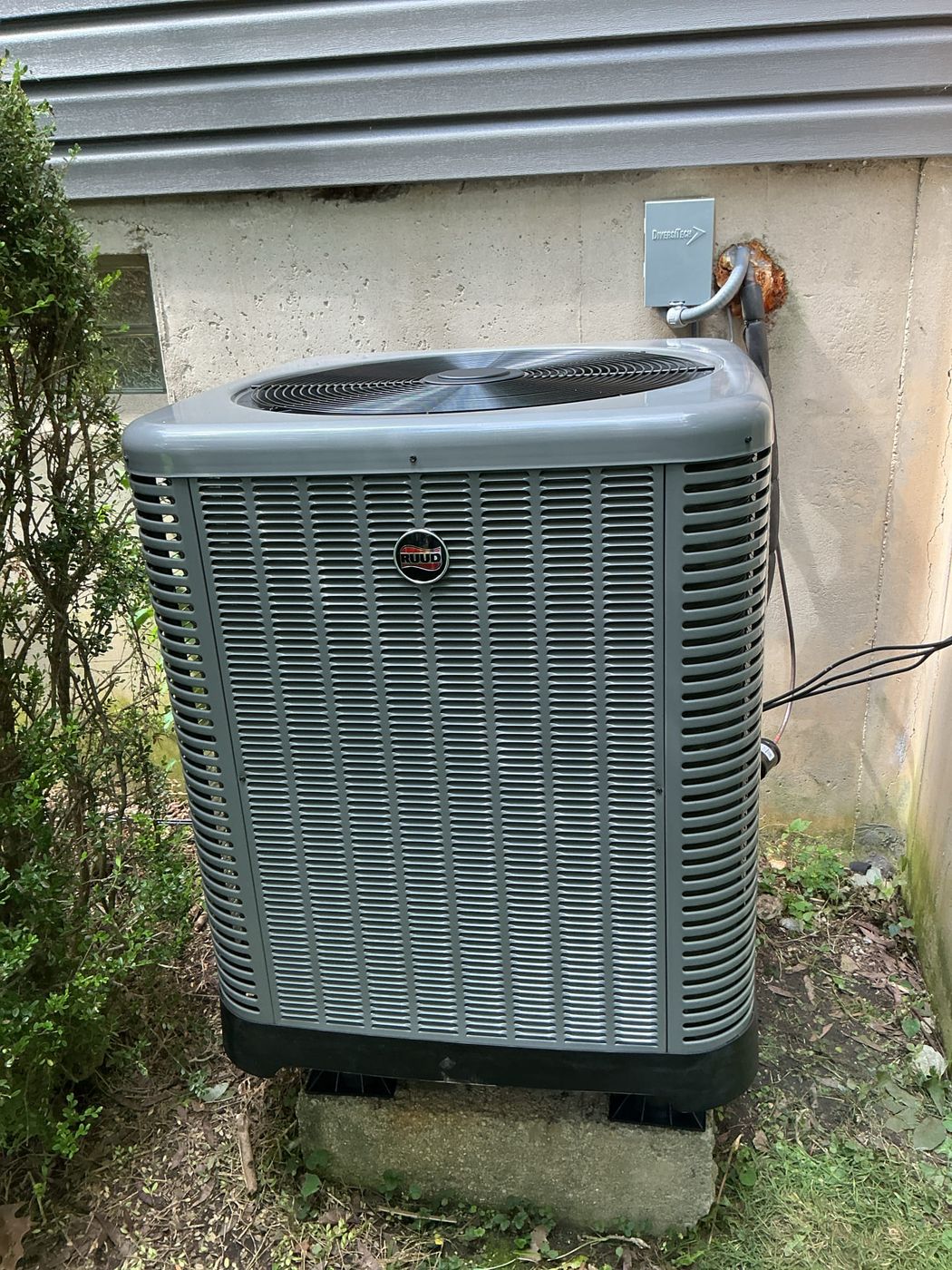
Signs a new heat pump makes sense.
How is a heat pump sized for an Ohio winter?
Sizing starts from the home's heat loss at the coldest outdoor temperature the local design data uses, not from the tonnage on the old unit. A heat pump sized only for the cooling load will lean on backup heat all winter. One sized for heating alone will short cycle every summer. If the existing system is not dead yet, heat pump repair may still be the better money this season.
What backup heat does a heat pump need?
Every heat pump in this climate is installed with a plan for the coldest nights. There are three configurations, and which one fits depends mostly on whether natural gas is already at the house. Where a gas furnace is worth keeping, furnace installation and the heat pump get quoted together as a dual-fuel system.
Every heat pump we install gets its backup heat configured one of three ways, and which one you want mostly depends on whether gas is already at the house.
Backup heat options on a residential heat pump.
| Factor | Electric backup heat | Dual fuel, gas furnace backup | No backup heat |
|---|---|---|---|
| How the backup works | Electric resistance elements sit in the air handler | A gas furnace takes over below a set outdoor temperature | The heat pump carries the whole heating load |
| Existing gas service | Not needed | Required at the house | Not needed |
| Running cost on the coldest nights | Highest of the three, electric resistance heat is expensive | Lower, the furnace carries the coldest hours | Depends entirely on the unit's rated low-temperature capacity |
| Control setup | Thermostat staging set at commissioning | A balance-point temperature set at commissioning | None |
| Upfront cost | Lowest of the three | Highest of the three | Middle of the three |
| Best fit | All-electric homes, and homes with no gas main | Homes with a gas furnace worth keeping | Well-insulated homes with a cold-climate rated unit |
Can a heat pump replace my furnace and air conditioner?
In many homes, yes. One outdoor unit and one indoor coil handle both seasons, which is why a heat pump replaces two pieces of equipment with one. Whether it is the right call depends on the ductwork, the insulation, and whether gas is already at the house. The heat pump services overview carries the full system comparison.
What does the installation include?
Removing and disposing of your old equipment, the outdoor unit set and levelled, the line set and electrical, the indoor air handler or coil, refrigerant charge verified by weight and subcooling, backup heat wired and staged, and the thermostat configured. We take commissioning readings before we leave.
A visit without surprises.
How much does a heat pump cost in Dayton or Cincinnati?
There is no honest single number, and anyone who gives you one over the phone is guessing at your house. A heat pump replacing an air conditioner on an existing furnace is a different job from a full dual-fuel conversion with new controls, and the electrical is the part people do not see coming. What we can do is tell you exactly what moves the figure, so the quote you get makes sense instead of arriving as a surprise.
Sizing and ductwork move the number more than the badge on the equipment does, and both are decided at the survey rather than over the phone.
What moves the price of a heat pump.
| What we look at | Which way it moves the price | How you can tell before we arrive |
|---|---|---|
| Size, and the balance point | Both ways. Sizing for an Ohio winter is not the same as sizing for July | The balance point is where the backup takes over. It gets set, not guessed |
| Dual-fuel or straight electric backup | Dual-fuel costs more to set up and less to run when it is properly cold | If you already have gas, dual-fuel is usually the cheaper system to live with |
| Electrical service and circuit | Up, and this is the one that surprises people on older panels | A 60 or 100 amp panel is the thing to check before you fall for a quote |
| Ductwork and return capacity | Up. A heat pump moves more air for longer than a furnace does | Ducts that were marginal on a furnace will be worse on a heat pump |
| Controls and thermostat | Up modestly. Dual-fuel needs a thermostat that can stage the two | Your existing thermostat may not be able to run the system you are buying |
| Permit and inspection | A fixed local cost, varying by town | We pull it and close it out. Never optional |
How long does a heat pump replacement take?
Most residential heat pump replacements are a single-day job, and installation usually happens within a day or two of the estimate. A dual-fuel conversion that also replaces the furnace, or a job that adds an electrical circuit, runs into a second day.
Can I finance it?
Yes, and a heat pump starts as low as $69 a month with approved credit, the best-case advertised payment rather than a quote for your house. GoodLeap, Synchrony and Wright-Patt Credit Union set the rate and the term rather than us, with payment options shown next to the written quote. More on the financing page. One thing to know: the Section 25C and 25D federal tax credits both expired on 31 December 2025, so no number we give you leans on one. Afterwards, X-Plan covers the two seasonal visits a year-round system wants.
What else do homeowners ask before installing a heat pump?
Last updated
