

Water heater installation and replacement in Dayton & Cincinnati.
Tank or tankless, sized to what your household actually uses at its busiest. Set to code, tested at every tap, old unit hauled away. Common sizes are on the shelf, so most replacements finish the same day.
Replacing a tank before it goes beats mopping a utility room after it does. Sized to your household, set to code, old unit hauled away.
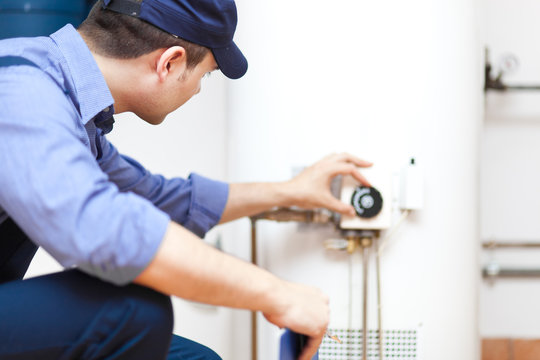
Signs a new unit makes sense.
When should I replace my water heater instead of repairing it?
A tank past ten years, a unit leaking anywhere on the shell, rusty hot water, repeat repairs in a single year, or a household that has outgrown its capacity. Any one of those makes replacement the better money. Replacing ahead of a failure also means choosing the unit rather than taking what is in stock at 9 p.m. Where the fault is a part rather than the tank, repairing it is cheaper.
What size water heater do I need?
Sizing works off peak demand. A household of one or two usually lands on 30 to 40 gallons, three or four on 40 to 50, and five or more on 50 to 80 gallons or a tankless unit. Simultaneous showers, a large tub, or a high-flow shower head all push the number up.
We size against that peak, not against whatever is being carried out. Plenty of houses have been living with an undersized tank for years without knowing it.
Should I switch to tankless?
Tankless makes sense when you are running out of hot water, when the utility room space matters, or when the existing gas and venting are already being opened up. It costs more to install because it needs a larger gas line and dedicated venting. In a home with adequate hot water, a tank is usually the better value, and the tank and tankless comparison lays both out.
What does a water heater installation include?
Draining and removing the old unit, checking the gas line, venting, electrical and water connections against current code, setting the new unit with a new expansion tank and shut-off where required, testing at every tap, and hauling the old heater away. We pull the permit where your jurisdiction requires one.
All of it under Ohio plumbing license #13557, and none of it as a line item added after the fact.
A visit without surprises.
How long does it take?
A straight tank-for-tank swap is usually a few hours. A tankless conversion runs longer, because the gas line sizing, the venting and sometimes the electrical all change. Common tank sizes are stocked, so most replacements happen the day you approve the quote.
Is financing available on a water heater replacement?
Yes, on qualifying installations. A water heater rarely fails on a convenient week, so monthly options exist for exactly that reason. Current terms are on our financing page.
Does hard water shorten the life of a new water heater?
Yes, and it is worth planning around here. Every municipal system in the footprint delivers at least 7 grains per gallon, and that scale settles in the tank bottom and coats electric elements. Flushing the tank annually helps, and a softener helps more if the house does not already have one.
What else do homeowners ask before replacing a water heater?
Last updated
