

Sump pump repair, replacement and battery backups in Dayton & Cincinnati.
A sump pump lasts 7 to 10 years and then fails during a storm, which is also when the power goes out. We repair, replace and add battery backups, and flood-test the pit through a full cycle before leaving.
Storms that flood basements are usually the same storms that take the power out. That is the problem a backup exists to solve.
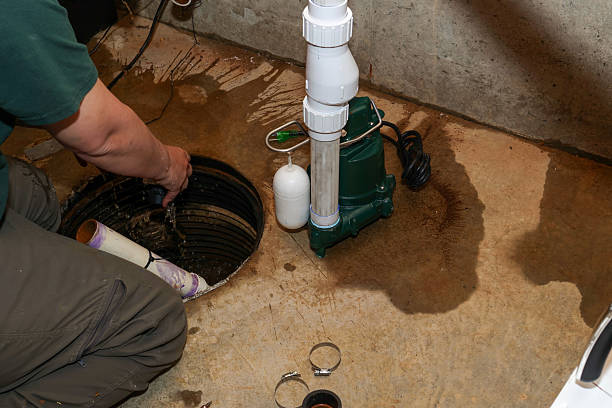
Signs your basement is at risk.
Repair, replace, and back up.
How long does a sump pump last?
Seven to ten years is the working range. A pump that is cycling constantly because the pit is undersized wears out at the short end of that; a pump in a dry basement that runs a few times a spring can go longer. Age alone is reason enough to consider replacing before a storm season, because failure is not gradual.
That is the argument for replacing on age rather than waiting for a warning you will not get. Pumps stop on the night the pit is fullest.
Do I need a sump pump in the Dayton area?
Most homes here with a full basement have one, and full basements are the norm across older Dayton neighborhoods and most of the suburban stock. A high water table, clay soil that sheds water toward foundations, and heavy spring rain are all local. If your basement has a pit, it was put there for a reason.
What are the signs my sump pump is failing?
A pump that runs constantly, or one that never runs while the pit fills. Grinding or rattling instead of a clean hum. A pit that fills faster than the pump empties it. Visible rust or a float that sticks. Any pump past seven years with any of those is worth replacing before the forecast turns.
We size against your pit, how high the discharge has to lift and how fast the water comes in, not against the horsepower on the box.
Sump pump types compared.
| Factor | Pedestal pump | Submersible pump | Battery backup |
|---|---|---|---|
| Where the motor sits | Above the pit on a shaft | Inside the pit, underwater | Alongside the primary pump |
| Typical service life | Often longer, motor stays dry | 7 to 10 years | Pump longer, battery shorter |
| Noise | Audible, motor is in the open | Quieter, water muffles it | Only runs when the primary cannot |
| Pit size needed | Works in a narrow pit | Needs a wider pit | Needs room for a second pump |
| Capacity | Lower flow | Higher flow | Intermittent, designed to outlast an outage |
| Power outage protection | None | None | This is the entire point of it |
| Best fit | Narrow older pits, budget replacement | Most homes, finished basements | Any finished basement, any home that loses power in storms |
Do I really need a battery backup?
If the basement is finished, or if storms knock your power out, yes. The rain event that overwhelms a pit is frequently the same event that takes down the grid, and a primary pump with no electricity does nothing at all. A backup runs on its own battery and takes over automatically.
It is the one piece of this that only matters on the worst night of the year, which is exactly why people skip it and then regret it.
A visit without surprises.
Why does my sump pump run constantly?
Usually one of four things: a float switch stuck in the on position, a failed check valve letting discharged water run back into the pit, a pit that is too small for the inflow, or a genuinely high water table after a wet stretch. The first three are repairs and all are testable in one visit.
How do I test my own sump pump?
Pour a five gallon bucket of water into the pit and watch. The float should rise, the pump should start, the pit should empty, and the pump should shut off cleanly without short-cycling. Do it every spring before storm season. If any part of that sequence hesitates, call (844) 584-7399 and a licensed Ohio plumber will look at it, working under Ohio plumbing license #13557. If the water is coming up through a floor drain instead of the pit, that is storm water in the sanitary line and a different job entirely.
What else do homeowners ask about sump pumps?
Last updated
