

Indoor air quality questions, answered straight.
The short version: keep the house between 30% and 50% humidity, change a 1-inch filter every 1 to 3 months, and do not buy a UV lamp expecting it to help with dust. The longer version is below.
Straight answers on MERV ratings, filter changes, winter humidity, UV lamps and duct cleaning, for homeowners in Dayton and Cincinnati.
The short version.
What MERV rating should I use at home?
The highest rating the duct system can move air through without a pressure penalty. In a standard 1-inch filter slot that is usually MERV 8 to 11. Going higher in the same slot drops airflow, which can freeze an evaporator coil in summer and trip a furnace high limit in winter. The cabinet upgrade that makes MERV 13 realistic is covered under indoor air quality solutions.
Go as high as your system's measured static pressure allows, which for most houses around here means somewhere between MERV 8 and MERV 13.
MERV ratings and what each one catches.
| MERV rating | What it captures | Airflow risk on a home system | Typical use |
|---|---|---|---|
| MERV 1 to 4 | Lint, carpet fiber, and the largest dust | None, this is the lowest-resistance filter sold | Fiberglass throwaway filters, which protect the equipment rather than the air |
| MERV 5 to 8 | Dust, pollen, mold spores, and dust mite debris | Safe in nearly every residential system | The default 1-inch pleated filter |
| MERV 9 to 12 | Fine dust, pet dander, and most airborne allergens | Safe in a 4-inch media cabinet, restrictive in a 1-inch slot | Allergy households that have a media cabinet |
| MERV 13 to 16 | Smoke, bacteria, and particles down to 0.3 microns | High risk in a 1-inch slot, needs a deep cabinet and measured static pressure | Only where the duct system has been measured first |
| HEPA | 99.97% of particles at 0.3 microns | Cannot be fitted inline on a standard residential air handler | A bypass unit, or a portable room unit |
How often should a furnace filter be changed?
A 1-inch filter every 1 to 3 months, sooner with pets or during a remodel. A 4-inch or 5-inch media filter every 6 to 12 months. The reliable test is holding it up to a light: if the light does not come through, the filter is done regardless of the calendar.
What humidity should a house hold in winter?
Between 30% and 40% through the heating season, and no higher than 50% at any time of year. Below 30% causes static, dry sinuses, and shrinking trim. Above 50% in a cold Ohio house puts condensation on the windows, and above 60% feeds mold. Whole-home humidifier services hold the bottom of that range through a Dayton January.
Do UV lights in HVAC systems really work?
Against biological growth on the evaporator coil and in the drain pan, yes, when they are sized and aimed correctly. They do not remove dust, dander, or pollen, because those are filtered out, not killed. A UV lamp sold as an allergy fix is sold wrong.
A visit without surprises.
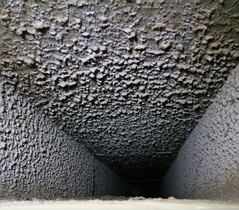
Does duct cleaning improve indoor air quality?
It helps when the ducts are genuinely dirty, which usually means after a remodel, in a house with pets, or in a system that has never been cleaned. It does not help a clean duct system, and it is no substitute for filtration. The honest version is to look at the ducts before quoting the work, which is how air duct cleaning is booked here. Why indoor air quality matters covers what is in the air to begin with.
How often should air ducts be cleaned?
Every 3 to 5 years covers most homes, with construction dust, pets, or a known mold problem moving it sooner. A system with a proper media filter and sealed returns stays clean longer, because less gets in to begin with.
How do I get a straight answer about my own house?
Call (844) 584-7399 or book an assessment online. We measure humidity and airflow, look at your filtration and ductwork, and give you a recommendation with a price on it before anything gets installed. Wider air quality work starts from the same visit.
A few more, kept separate from the sections above.
Last updated
