

Same-day sump pump repair in Dayton & Cincinnati.
Stuck floats, failed switches, clogged intakes, dead check valves, burned-out motors. We fix all of it, usually the same day, and flood-test the pit through a full cycle before leaving. Storm-season calls are answered at any hour.
Check the breaker and the float first. Then call, before the water reaches the floor.
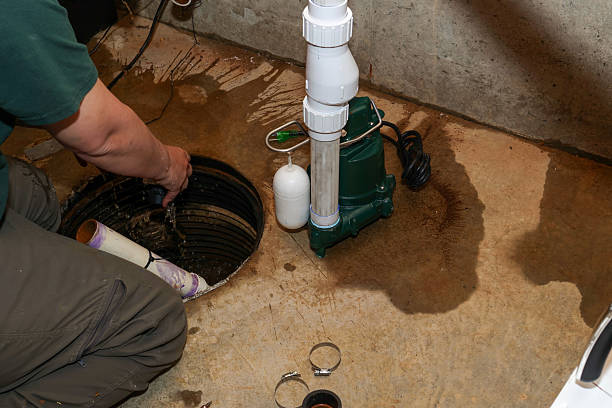
Failures we fix before they flood.
My sump pump is not turning on. What should I check first?
Two things, in this order. The breaker, because a pump that trips one is common and the reset is free. Then the float, because a float jammed against the pit wall or caught on the discharge pipe is the single most frequent cause of a pump that will not start. If both are fine, the switch or the motor has failed.
We ask people to check those two before we dispatch, because often enough it saves them a service call entirely.
The pump runs but no water leaves the pit. Why?
The impeller is clogged, the check valve has failed, or the discharge line is blocked or frozen. A pump that hums and moves nothing is doing the worst kind of work: burning its motor while the pit fills. Shut it off at the breaker if the pit is not rising fast, and call.
Why does my sump pump run constantly?
A stuck float leaves it on. A failed check valve lets the water it just pumped out drain straight back into the pit, so it pumps the same gallon repeatedly. An undersized pump or an undersized pit does the same thing for a different reason. All three are repairs and all three are diagnosable on one visit.
A visit without surprises.
Should I repair or replace my sump pump?
Past about seven years, or with the motor itself gone, replacing beats repairing. The rest of the pump is the same age as the part that failed.
When a sump pump is worth repairing and when it should be replaced.
| What we look at | Repair when | Replace when |
|---|---|---|
| Age | Under about 7 years | Past 7 to 10 years, at or near end of life |
| What failed | Float, switch, check valve or a clogged intake | Motor, impeller, or a seized shaft |
| Failure history | First problem the pump has had | Second call on the same pump in a year |
| Noise | Normal running sound once the fault is fixed | Grinding or a burning smell under load |
| Basement finish | Unfinished, low consequence if it fails again | Finished, where a failure means real damage |
| Backup protection | Backup already installed and tested | No backup, and replacement is the moment to add one |
| Pit and sizing | Pit and pump correctly sized | Pump cycling constantly because it is undersized |
How fast can someone get here when the pit is filling?
Most calls are handled the same day, and we dispatch at any hour on sump pumps. Heavy rain brings these in clusters, so the earlier in a storm you call (844) 584-7399, the better your slot. If water is already reaching the floor, say so on the phone.
What should I do while I wait?
Move anything that matters off the basement floor. If you have a wet-dry vac or a spare utility pump, start moving water. Do not stand in water near a running pump or any powered equipment, and if the water is approaching outlets or a furnace, kill the power to that area at the breaker. Water coming up through the floor drain rather than the pit is storm water entering the sanitary line, which is a different job.
What else do homeowners ask when a pump quits?
Last updated
