

Furnace repair and heating service in Centerville, Ohio
We repair and replace furnaces and heat pumps in Centerville, about nine miles from the Beavercreek office, across a town founded in 1796 and the late-twentieth-century ring around it. We answer the no-heat line at any hour, every day.
Furnace repair, replacement, and heat pumps from techs who've worked every kind of Miami Valley home — with a 24/7 line for the January no-heat call.
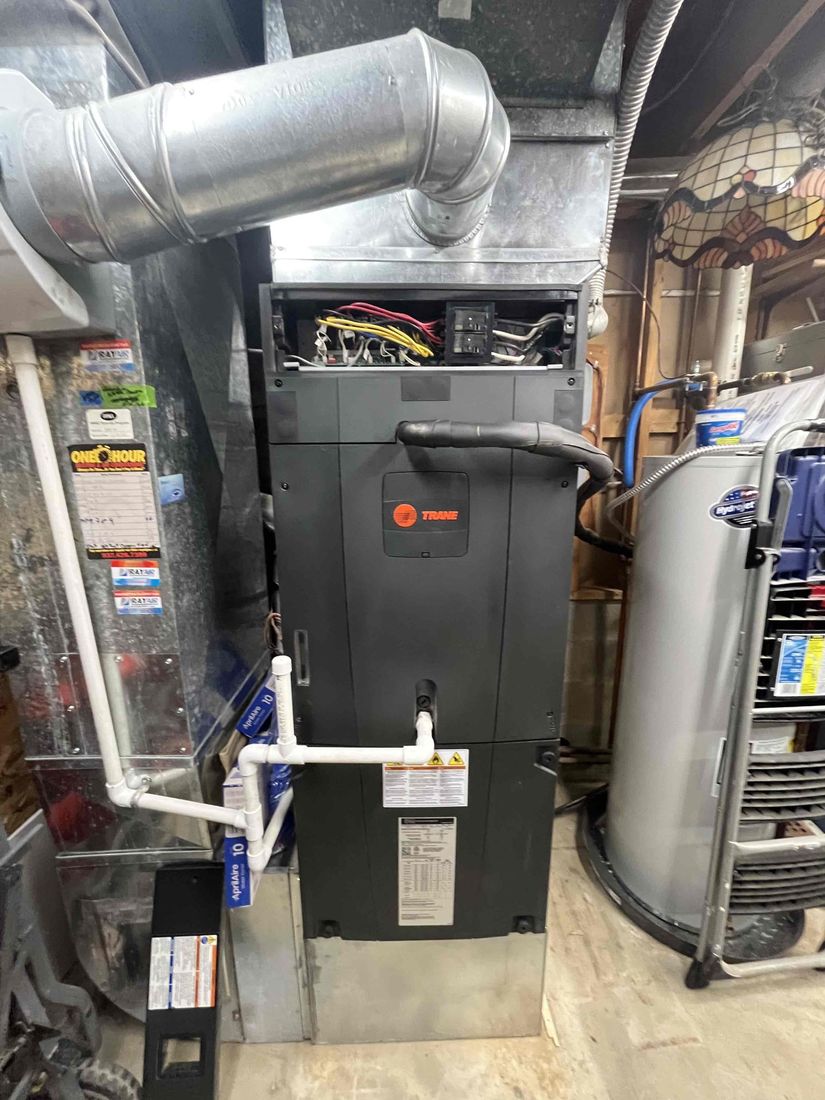
What heating work do you handle?
Any brand, any age, diagnosed and quoted before we start.
How does the housing era change the heating job?
Substantially. In Centerville's early limestone and timber structures, venting routes, equipment placement and duct runs are set by the building, and a lot of what is routine elsewhere is simply not possible. In the 1970s to 1990s subdivisions around the historic core the systems are conventional forced air on their second or third replacement, where the constraint is the original equipment closet. Same city, two different surveys.
My furnace is 18 years old and still works. Do I replace it?
Not on age alone. Age changes the maths on the next repair rather than forcing a decision today. Once a furnace is past about fifteen years, the test is what a repair costs against what it buys you: a $200 fix on a system with five years left is money well spent, and the same $200 on one with a failing heat exchanger is not. What is worth doing before winter on a furnace that old is a real safety inspection, so a decision in January gets made with information rather than in a cold house at 9pm.
What actually happens during a furnace tune-up?
It should be a list of measurements, not a look. Combustion analysis at the flue, gas pressure at the manifold, temperature rise across the heat exchanger, amp draw on the blower and the inducer, flame sensor cleaned and its microamp signal read, safeties tested rather than assumed, and a look at the heat exchanger itself. Ask for the numbers afterwards. A visit that produces no readings gives you nothing to compare against next year, and year-on-year comparison is most of what a tune-up is actually for.
The vents smell like burning dust when the heat first comes on.
That one is usually nothing. Dust settles on the heat exchanger over a summer of not running, and the first few cycles in autumn burn it off. It should fade within an hour or two of running and not come back. What is not normal is a smell that persists past that, a sharp electrical or plastic smell at any point, or anything like rotten eggs. The last one is the additive put into natural gas so you can smell a leak, and it means leave the house and call the gas utility before you call anyone else.
One room never gets warm. Is the furnace the problem?
Usually not. A furnace that satisfies the thermostat is doing what it was asked, and the room that stays cold is almost always a duct problem: a run that is too long or too small, a damper closed years ago and forgotten, a crushed flex duct in a joist bay, or a return that cannot pull enough air back for the supply to push. Adding return capacity fixes more of these houses than replacing the furnace does, and it costs a fraction of what a new system does. Ask for the airflow to be measured before anyone quotes you equipment.
Should I repair my furnace or replace it?
How do I book heating service in Centerville?
Call (844) 584-7399 and you get a person, or book online in about a minute. If it's an emergency, no heat or water on the floor, call rather than booking. That skips the next-day queue and goes straight to the 24/7 line.