

Plumbers in Centerville, Ohio: repairs, water heaters and drains
We handle water heaters, drains, leaks and sewer lines in Centerville. This is one of four Montgomery County cities that inspects its own plumbing, so your permit comes from the city, not the county. The emergency line never closes.
The same team you trust with your furnace now handles water heaters, drains, leaks, and sump pumps — with the same upfront pricing.
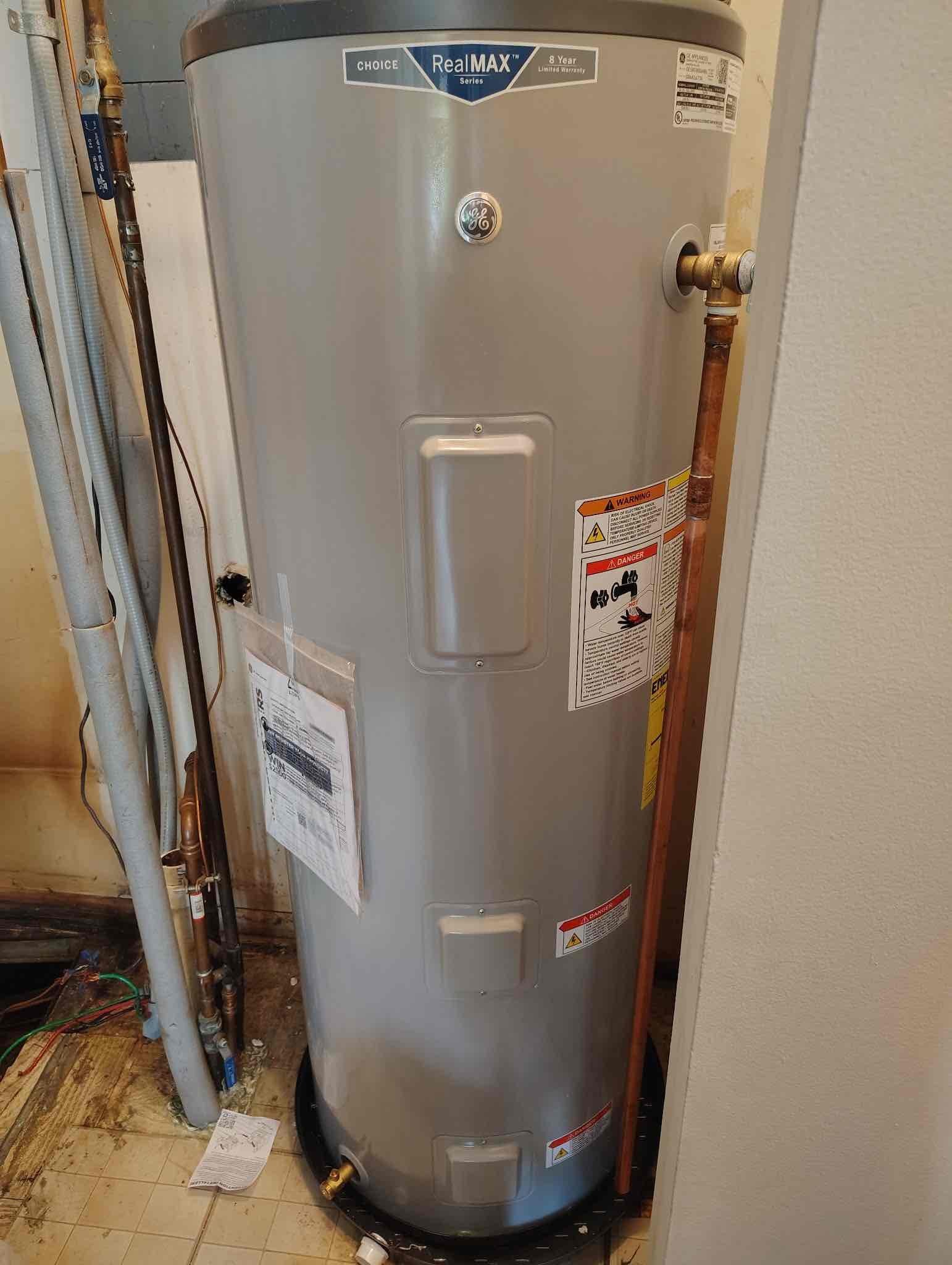
What plumbing work do you handle?
Our plumbers are licensed in Ohio, license #13557.
Did Centerville's water change in 2025?
For part of the city. Most of Centerville is on the Montgomery County and Dayton regional supply, but small parts are Greene County Sanitary Engineering customers and were inside the January to March 2025 softening changeover, when hardness went from 27 grains per gallon to about 8. Those households have a softener still set for the old water. The rest of the city does not.
Who inspects plumbing in Centerville?
The city. Public Health, Dayton & Montgomery County excludes Centerville, Dayton, Oakwood and Kettering from its county plumbing program, so a Centerville plumbing permit is a city permit.
My house has old galvanized pipe. Does it all have to go?
Not necessarily all at once. Galvanized supply line rusts from the inside, so the bore narrows over decades until flow suffers and the water runs brown after the house has sat empty. Whether it wants full repiping or a partial depends on how much has already been replaced by previous owners, which is usually more than people expect. A look at the exposed runs in the basement tells you a lot for free. Where repiping is the right answer, it is worth doing before a remodel rather than after.
What should never go down the garbage disposal?
Grease first, and it is not close. It goes down warm and liquid and cools into a solid on the pipe wall a few feet along, then catches everything after it. After that: coffee grounds, eggshells, pasta and rice, and anything fibrous like celery or onion skins. A disposal that hums without turning is usually jammed rather than dead, and there is a hex socket on the underside for exactly that. If it is silent, check the reset button before assuming it needs replacing.
Which pipes actually freeze, and what stops it?
The ones on exterior walls, in crawl spaces, in unheated garages, and the hose bibs outside. A pipe rarely bursts where it froze; the ice blocks the line and the pressure builds between that block and a closed tap, so the split happens somewhere else entirely. On a hard freeze, open the cabinet doors under sinks on outside walls and let a pencil-width trickle run from the furthest tap. Disconnect hoses in autumn, because a hose left on a bib is the single most common frozen-pipe call we take.
The water bill jumped and nothing looks wet. What now?
Read the meter with everything in the house off. If it is still moving, you have a leak on the pressurised side and it is running somewhere you cannot see, usually under a slab, behind a wall, or in the line between the meter and the house. Before assuming the worst, rule out the toilets: a flapper that is not seating will run silently and waste more water than most people believe. Put a few drops of food coloring in the tank and wait twenty minutes without flushing. Color in the bowl means you found it.
Same trucks. Same standards. Now with pipes.
- ✓Licensed and insured plumbers on every job.
- ✓Same-day water-heater swaps in most cases.
- ✓On camera drain and sewer work you can see for yourself.
How do I book a plumber?
Call (844) 584-7399 and you get a person, or book online in about a minute. If it's an emergency, no heat or water on the floor, call rather than booking. That skips the next-day queue and goes straight to the 24/7 line.