

Furnace repair and heating service in Cincinnati, Ohio
We repair and replace gas, electric and oil furnaces and heat pumps in Cincinnati. Roughly 40% of the city's housing predates 1939, so plenty of it was built with no ductwork at all, and for those houses the answer is usually a ductless system. We answer the no-heat line at any hour.
Furnace repair, replacement, and heat pumps from techs who've worked every kind of Cincinnati-area home — with a 24/7 line for the January no-heat call.
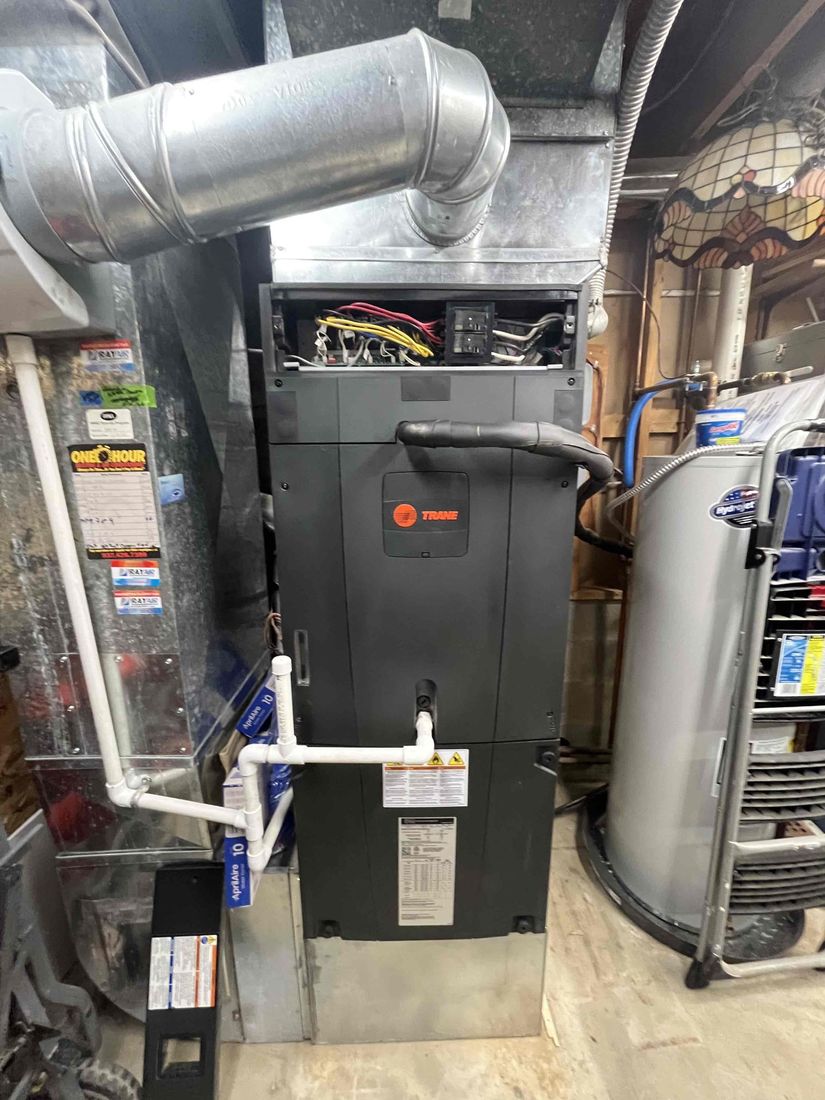
What heating work do you handle?
Any brand, any age, diagnosed and quoted before we start.
Does Cincinnati's climate zone change the furnace size?
It can. Hamilton County sits in IECC climate zone 4A while the rest of the service area sits in 5A, and Cincinnati averages 5,364 heating degree days on the NOAA 1991 to 2020 normals. A load calculation done for a house 30 miles north can oversize the equipment here, and an oversized furnace short cycles, wears faster and heats less evenly than a correctly sized one.
Why is the house so dry in winter, and does a humidifier help?
Cold outdoor air holds very little moisture, so every air change your house makes in January swaps damp indoor air for dry. The furnace does not cause it, it just moves it around. What you notice is static, dry skin, and gaps opening in hardwood floors and trim that close again in summer. A whole-house humidifier plumbed into the ductwork handles it more evenly than portable units, and it wants a humidistat rather than a fixed setting, because running too wet in a cold snap puts condensation on the inside of your windows.
How often should I actually change the filter?
A one-inch filter every one to three months, sooner with pets or during any kind of remodel. A four or five-inch media filter every six to twelve months. The reliable test is holding it up to a light: if the light does not come through, it is restricting the return whatever the calendar says. The mistake worth avoiding is buying the densest filter on the shelf. A high-MERV filter in a system not designed for it starves the blower, and a starved blower on a furnace is how a heat exchanger cracks early.
How do I know if the heat exchanger is cracked?
You mostly do not, which is why it gets checked rather than guessed at. A cracked heat exchanger can put combustion gas into the air you breathe while the furnace still appears to run normally. The signs worth calling about are a burner flame that flickers or turns yellow when the blower kicks on, soot around the burner compartment, and a carbon monoxide alarm that trips even once. A furnace with a confirmed crack gets shut off and red-tagged the same visit. That is not an upsell, it is the only legal answer, and any company that offers to keep running it is telling you something about how they work.
Should the furnace and the air conditioner be replaced together?
Not automatically, but there is a real reason it comes up. The indoor coil sits in the furnace cabinet and the two are matched as a system, so replacing one and keeping the other can leave you with a pairing that does not hit the efficiency either part was rated for. If both are near end of life, doing them together costs less than two separate jobs because it is one visit and one set of connections. If the air conditioner is eight years old and healthy, keep it and say so to anyone who tells you otherwise.
Should I repair my furnace or replace it?
How do I book heating service in Cincinnati?
Call (844) 584-7399 and you get a person, or book online in about a minute. If it's an emergency, no heat or water on the floor, call rather than booking. That skips the next-day queue and goes straight to the 24/7 line.