

Plumbing has come to Englewood
We handle water heaters, drains, leaks and sewer lines in Englewood, Ohio. Our plumbers are licensed in Ohio, license #13557. Most calls get handled the same day, and someone answers the emergency line at any hour.
The same team you trust with your furnace now handles water heaters, drains, leaks, and sump pumps — with the same upfront pricing.
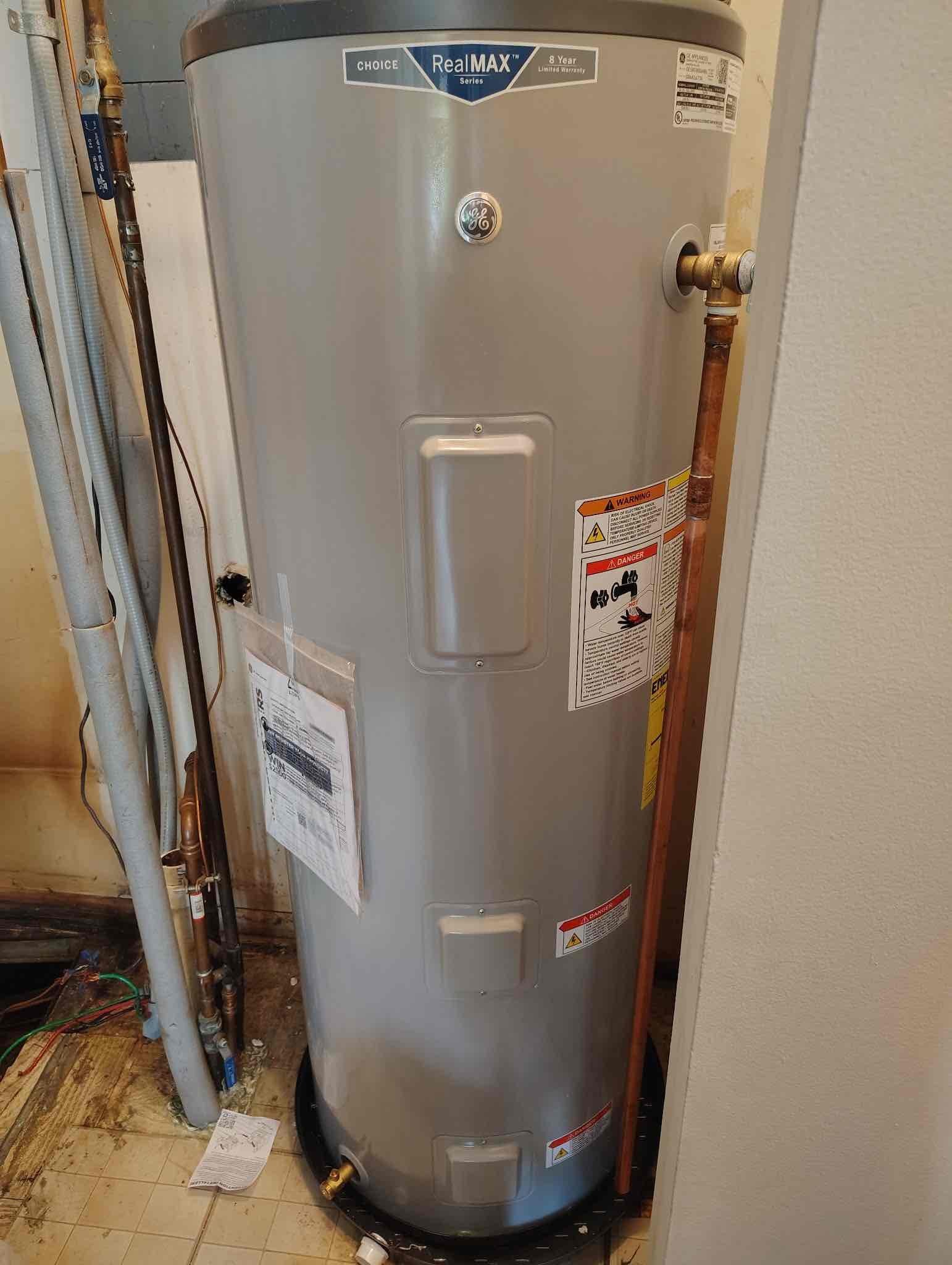
From the water heater to the sewer line.
How do I know the sump pump will work when I need it?
Test it rather than trusting it, because a sump pump sits idle for months and then has one job. Pour a bucket of water into the pit slowly and watch: the float should rise, the pump should start, the water should drop, and it should shut off cleanly without chattering. Do that in early spring and again before winter. The two failures worth planning for are a stuck float, which is cheap, and a power cut during the storm that needed the pump, which is what battery backup exists for.
What should never go down the garbage disposal?
Grease first, and it is not close. It goes down warm and liquid and cools into a solid on the pipe wall a few feet along, then catches everything after it. After that: coffee grounds, eggshells, pasta and rice, and anything fibrous like celery or onion skins. A disposal that hums without turning is usually jammed rather than dead, and there is a hex socket on the underside for exactly that. If it is silent, check the reset button before assuming it needs replacing.
What should I do if I smell gas?
Leave, then call from outside. Do not switch anything on or off, including lights, and do not use the phone indoors, because a switch contact is an ignition source. Once you are out, call the gas utility's emergency line first: they will come and make it safe at no charge, and they will do it faster than anyone else. Call us after that for the repair. This is the one plumbing situation where the right first call is not to a plumber, and anyone who tells you otherwise is wrong.
We are remodeling. When should the plumber be involved?
Earlier than most people ask. Once a wall is open you can see what is behind it, and decisions about moving a stack, upsizing a supply run or replacing the last of the old pipe cost a fraction of what they cost after the drywall is back. It is also when permits and inspections are cheapest to handle, because they can be scheduled around the rest of the work rather than holding it up. A short conversation at the drawing stage tends to save arguments at the tiling stage.