

Plumbing has come to Fairborn
We handle water heaters, drains, leaks and sewer lines in Fairborn, Ohio. Our plumbers are licensed in Ohio, license #13557. Most calls get handled the same day, and someone answers the emergency line at any hour.
The same team you trust with your furnace now handles water heaters, drains, leaks, and sump pumps — with the same upfront pricing.
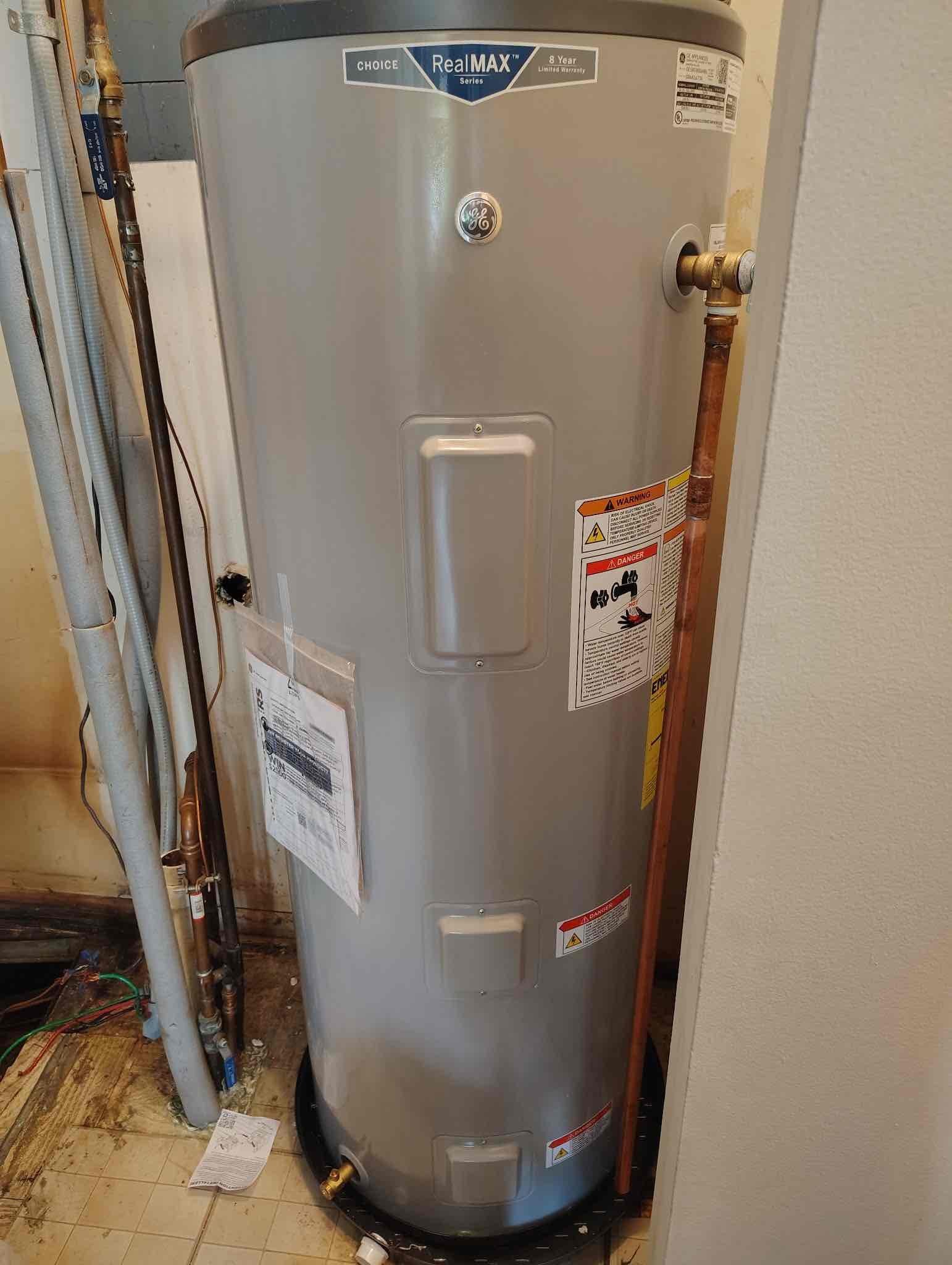
From the water heater to the sewer line.
The water pressure has dropped. Where do I start?
First work out whether it is the whole house or one fixture, because that splits the problem in half. One fixture is almost always an aerator or a cartridge, and both are small jobs. Whole house points at the pressure regulator, a partly closed main valve, or galvanized supply pipe that has corroded closed from the inside over decades. That last one is common in pre-war houses and it is progressive, so pressure that has been slowly falling for years is telling you something different from pressure that dropped last week.
What should never go down the garbage disposal?
Grease first, and it is not close. It goes down warm and liquid and cools into a solid on the pipe wall a few feet along, then catches everything after it. After that: coffee grounds, eggshells, pasta and rice, and anything fibrous like celery or onion skins. A disposal that hums without turning is usually jammed rather than dead, and there is a hex socket on the underside for exactly that. If it is silent, check the reset button before assuming it needs replacing.
Why does a plumber care about my outside taps and irrigation?
Because of backflow. If pressure in the main drops, water can be pulled backwards out of a hose left in a pool, a bucket, or an irrigation line, and into the drinking water. That is why hose bibs have vacuum breakers and why irrigation systems need a backflow device, and why some of them are required to be tested. It is not a sales conversation, it is a code one, and it is worth knowing what you have before a home sale puts it on someone's list.
Can tree roots really get into a sewer line?
Routinely, and older neighborhoods see it most because the mature trees and the clay tile sewer lines arrived together. Roots do not break into a sound pipe. They find a joint that is already weeping and grow toward the water, then thicken until the line catches paper and grease. The signs are more than one fixture backing up at once, gurgling from a toilet when the washer drains, and a lawn that is greener in a line across the yard. Cutting them clears it; whether the line then needs lining or replacing is a camera question, not a phone one.