

Plumbing has come to Greene County
We handle water heaters, drains, leaks and sewer lines in Greene County, Ohio. Our plumbers are licensed in Ohio, license #13557. Most calls get handled the same day, and someone answers the emergency line at any hour.
The same team you trust with your furnace now handles water heaters, drains, leaks, and sump pumps — with the same upfront pricing.
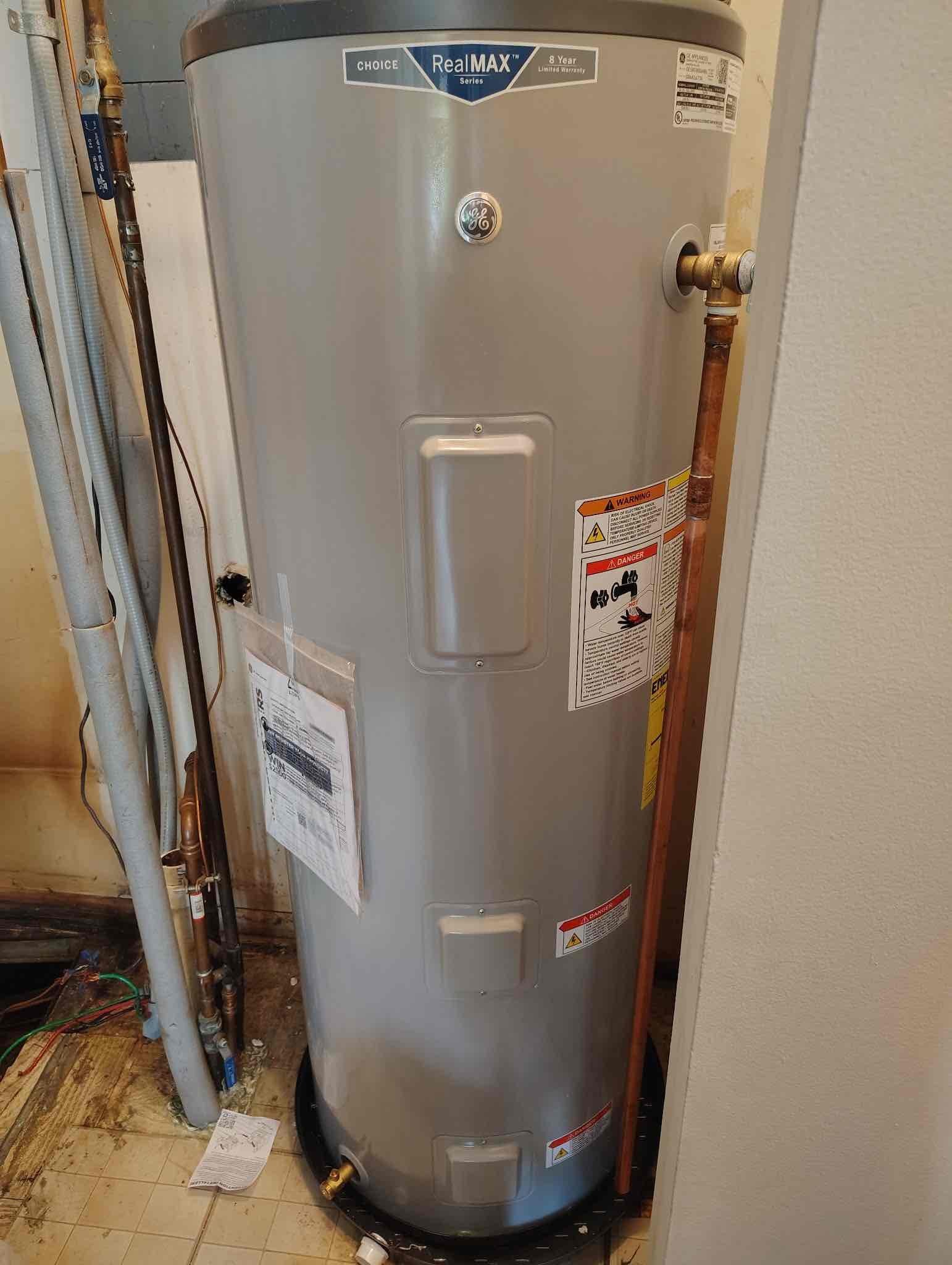
From the water heater to the sewer line.
The water bill jumped and nothing looks wet. What now?
Read the meter with everything in the house off. If it is still moving, you have a leak on the pressurised side and it is running somewhere you cannot see, usually under a slab, behind a wall, or in the line between the meter and the house. Before assuming the worst, rule out the toilets: a flapper that is not seating will run silently and waste more water than most people believe. Put a few drops of food coloring in the tank and wait twenty minutes without flushing. Color in the bowl means you found it.
Which pipes actually freeze, and what stops it?
The ones on exterior walls, in crawl spaces, in unheated garages, and the hose bibs outside. A pipe rarely bursts where it froze; the ice blocks the line and the pressure builds between that block and a closed tap, so the split happens somewhere else entirely. On a hard freeze, open the cabinet doors under sinks on outside walls and let a pencil-width trickle run from the furthest tap. Disconnect hoses in autumn, because a hose left on a bib is the single most common frozen-pipe call we take.
A toilet that runs on and off by itself. Serious?
It is called phantom flushing and it means water is escaping from the tank into the bowl, so the fill valve keeps topping it up. The culprit is nearly always the flapper, which hardens with age and stops sealing, and it is one of the cheapest parts in the house. It is worth fixing quickly rather than living with, because it runs continuously and quietly, and a running toilet shows up on the water bill at a scale that surprises people who assumed it was just a noise.
How do I know the sump pump will work when I need it?
Test it rather than trusting it, because a sump pump sits idle for months and then has one job. Pour a bucket of water into the pit slowly and watch: the float should rise, the pump should start, the water should drop, and it should shut off cleanly without chattering. Do that in early spring and again before winter. The two failures worth planning for are a stuck float, which is cheap, and a power cut during the storm that needed the pump, which is what battery backup exists for.