

Hamilton County heating help, extremely fast
We repair and replace gas, electric and oil furnaces, and heat pumps in Hamilton County, Ohio. Any brand, any age, diagnosed and quoted before we start. Most calls get handled the same day, and someone answers the emergency line at any hour.
Furnace repair, replacement, and heat pumps from techs who've worked every kind of southwest Ohio home — with a 24/7 line for the January no-heat call.
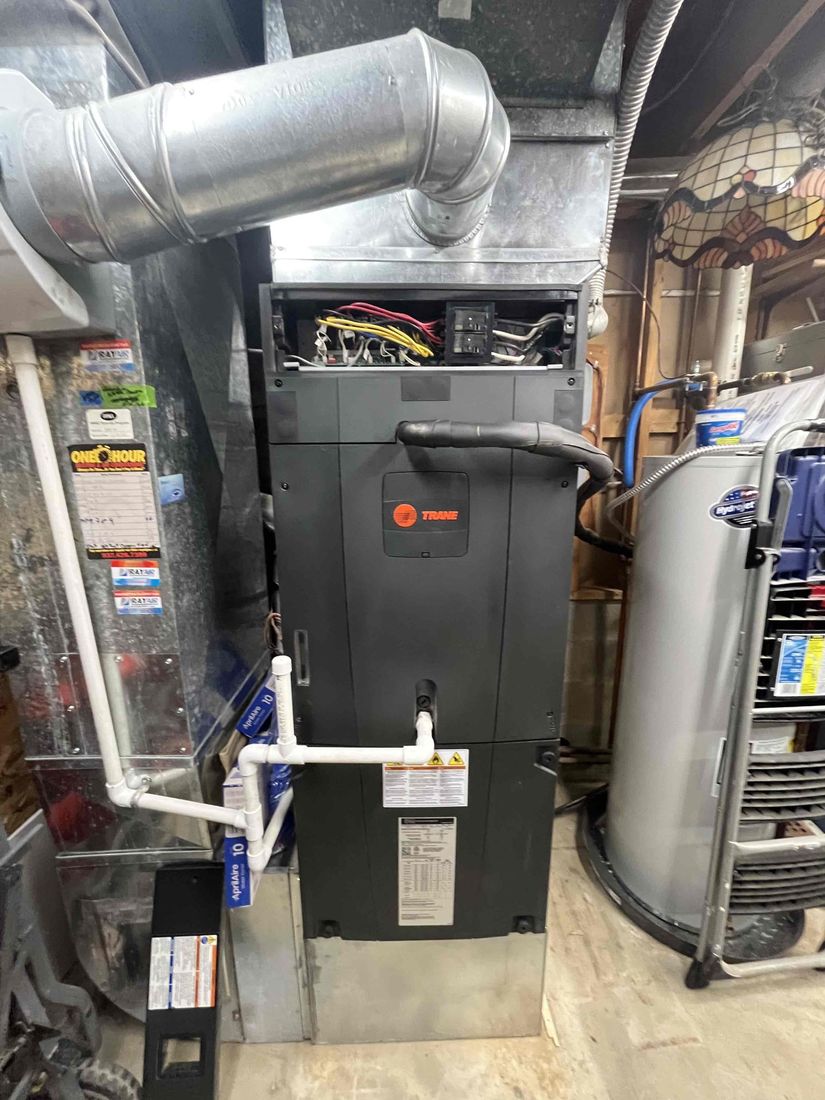
Every way a Hamilton County home stays warm.
Why is the house so dry in winter, and does a humidifier help?
Cold outdoor air holds very little moisture, so every air change your house makes in January swaps damp indoor air for dry. The furnace does not cause it, it just moves it around. What you notice is static, dry skin, and gaps opening in hardwood floors and trim that close again in summer. A whole-house humidifier plumbed into the ductwork handles it more evenly than portable units, and it wants a humidistat rather than a fixed setting, because running too wet in a cold snap puts condensation on the inside of your windows.
How do I know if the heat exchanger is cracked?
You mostly do not, which is why it gets checked rather than guessed at. A cracked heat exchanger can put combustion gas into the air you breathe while the furnace still appears to run normally. The signs worth calling about are a burner flame that flickers or turns yellow when the blower kicks on, soot around the burner compartment, and a carbon monoxide alarm that trips even once. A furnace with a confirmed crack gets shut off and red-tagged the same visit. That is not an upsell, it is the only legal answer, and any company that offers to keep running it is telling you something about how they work.
Will a smart thermostat actually cut my gas bill?
Some, and less than the box claims. The saving comes from setbacks you would not have bothered with, not from the thermostat being clever. The bigger reason to care is what it tells you: run times, cycle counts and how long the house takes to recover. A furnace that used to run twelve minutes and now runs twenty-five is telling you something months before it fails. One caution for older systems, a two-stage or variable-speed furnace wired to a thermostat that cannot stage it will run on high heat permanently, which is worse than the thermostat you replaced.
How often should I actually change the filter?
A one-inch filter every one to three months, sooner with pets or during any kind of remodel. A four or five-inch media filter every six to twelve months. The reliable test is holding it up to a light: if the light does not come through, it is restricting the return whatever the calendar says. The mistake worth avoiding is buying the densest filter on the shelf. A high-MERV filter in a system not designed for it starves the blower, and a starved blower on a furnace is how a heat exchanger cracks early.