

Indoor air quality services in Kettering, Ohio
We install filtration, humidity control and ventilation in Kettering, about seven miles from the Beavercreek office. In 1950s housing the filter you can run is limited by return capacity, not preference, so we measure airflow first.
Filtration, purification, and humidity control for allergy season, dry winters, and everything the Miami Valley air brings inside.
What indoor air quality equipment can I get?
We measure humidity, particulates and ventilation before recommending anything.
Can a 1950s Kettering house take a high-MERV filter?
Sometimes, and sometimes only at a lower rating. A house with one or two returns and 60 to 75 year old ductwork is already running at higher static pressure than modern equipment likes. Dropping a dense filter into that starves the blower, which costs more comfort than the filter gains. The order of operations here is airflow first, filtration second, and a static pressure reading decides which filter the house can actually carry.
What actually helps with allergies at home?
In rough order of effect: keep humidity between about 35 and 50%, upgrade to real media filtration sized for the system rather than a denser one-inch filter, deal with the source where you can, and only then look at added equipment. Bedrooms matter more than the rest of the house because of how many hours are spent in them. Nothing here is dramatic on its own, and the combination usually is, which is the opposite of how air quality equipment tends to be sold.
What do UV lights in the ductwork actually do?
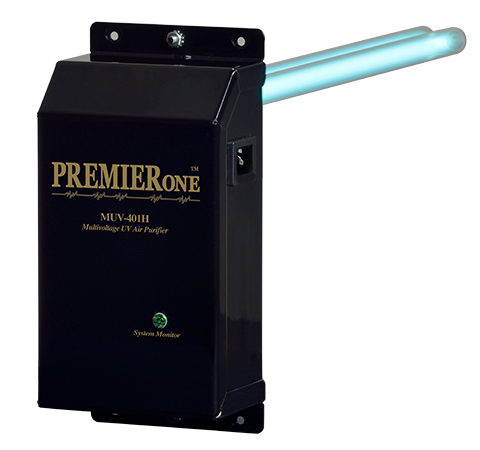
Two quite different jobs get sold under one name. A coil light aimed at the evaporator keeps growth off a surface that is wet for half the year, and that one has a straightforward case: it keeps a coil clean and it keeps the musty smell down. An air-stream light is meant to treat organizms as they pass, and air moves quickly, so contact time is short and the benefit is much harder to demonstrate. If someone is quoting UV, ask which of the two it is and what it is being asked to fix.
The basement smells musty and it is spreading upstairs.
Basements run cooler, so humid summer air condenses down there, and anything the air handler pulls in gets distributed to the whole house. Measure the relative humidity before doing anything else. Above about 60% the answer is dehumidification and finding where the water is coming from, not air freshening. Check the obvious sources first: grading and downspouts outside, an uninsulated cold-water line sweating, and a condensate drain that is discharging where it should not.
Everything is static and the wood floors are gapping.
That is winter dryness, and it is a real air quality problem rather than an inconvenience. Cold outdoor air carries almost no moisture, so every air change in January leaves the house drier. Below about 30% relative humidity you get static, cracked skin, irritated airways and gaps opening in flooring and trim. A whole-house humidifier on a humidistat handles it more evenly than portable units. Do not simply run it high: too much moisture in a cold snap condenses on windows and inside exterior walls.
How do I know it worked?
How do I book an air quality assessment in Kettering?
Call (844) 584-7399 and you get a person, or book online in about a minute. If it's an emergency, no heat or water on the floor, call rather than booking. That skips the next-day queue and goes straight to the 24/7 line.