

Breathe easier, Montgomery County
We install filtration, humidity control and ventilation equipment in Montgomery County, Ohio. We measure humidity, particulates and ventilation before recommending anything. Most calls get handled the same day, and someone answers the emergency line at any hour.
Filtration, purification, and humidity control for allergy season, dry winters, and everything the southwest Ohio air brings inside.
Matched to your air, not a catalog.
What is the difference between CO and CO2 in a house?
Carbon monoxide is the dangerous one and comes from incomplete combustion: furnaces, water heaters, fireplaces, a car in an attached garage. It has no smell and it needs alarms. Carbon dioxide is what people exhale, and while it is not toxic at household levels, a room where it climbs is a room that is not being ventilated, so it is a useful proxy for stale air. Alarms are for the first. The second is a ventilation question rather than a safety one.
What do UV lights in the ductwork actually do?
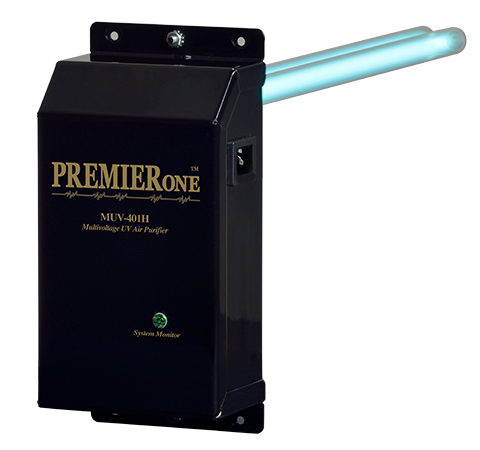
Two quite different jobs get sold under one name. A coil light aimed at the evaporator keeps growth off a surface that is wet for half the year, and that one has a straightforward case: it keeps a coil clean and it keeps the musty smell down. An air-stream light is meant to treat organizms as they pass, and air moves quickly, so contact time is short and the benefit is much harder to demonstrate. If someone is quoting UV, ask which of the two it is and what it is being asked to fix.
What actually affects the air in a house?
Four things, roughly in order: moisture, ventilation, filtration and source control. Humidity that sits too high grows things and too low irritates everything. Ventilation decides whether what you generate indoors gets diluted or accumulates. Filtration catches particles, and only particles. Source control means the cooking, the cleaning products, the attached garage and the pets that put things into the air in the first place. Most air quality money gets spent on the third one when the answer was one of the other three.
Whole-house or portable? Which is the better buy?
It depends whether the problem is a room or a house. A portable unit in a bedroom is a reasonable, cheap answer to one person's sleep. It is not a house solution, and buying five of them is worse value than doing it once in the ductwork. The catch with whole-house is that it only treats air while the system is running, so if yours cycles rarely in mild weather, a variable-speed blower on low changes what the equipment can actually do.