

Preble County heating help, extremely fast
We repair and replace gas, electric and oil furnaces, and heat pumps in Preble County, Ohio. Any brand, any age, diagnosed and quoted before we start. Most calls get handled the same day, and someone answers the emergency line at any hour.
Furnace repair, replacement, and heat pumps from techs who've worked every kind of southwest Ohio home — with a 24/7 line for the January no-heat call.
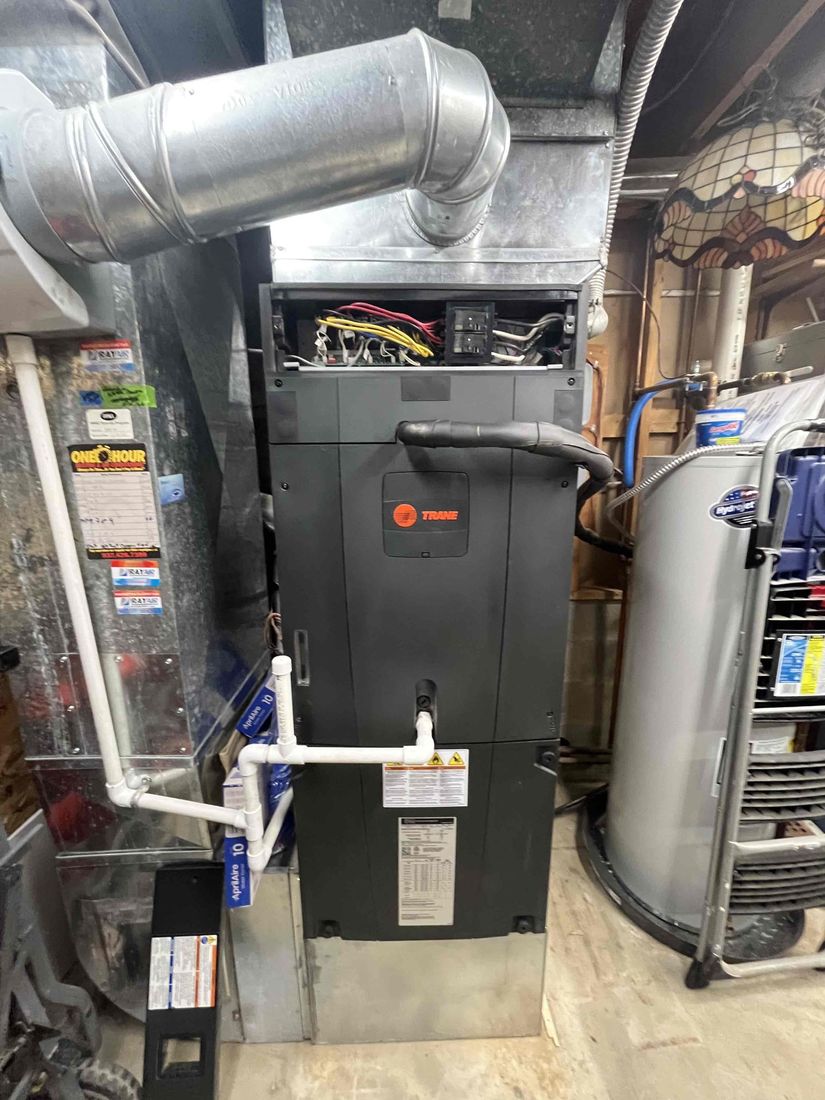
Every way a Preble County home stays warm.
How do I know if the heat exchanger is cracked?
You mostly do not, which is why it gets checked rather than guessed at. A cracked heat exchanger can put combustion gas into the air you breathe while the furnace still appears to run normally. The signs worth calling about are a burner flame that flickers or turns yellow when the blower kicks on, soot around the burner compartment, and a carbon monoxide alarm that trips even once. A furnace with a confirmed crack gets shut off and red-tagged the same visit. That is not an upsell, it is the only legal answer, and any company that offers to keep running it is telling you something about how they work.
My furnace is 18 years old and still works. Do I replace it?
Not on age alone. Age changes the maths on the next repair rather than forcing a decision today. Once a furnace is past about fifteen years, the test is what a repair costs against what it buys you: a $200 fix on a system with five years left is money well spent, and the same $200 on one with a failing heat exchanger is not. What is worth doing before winter on a furnace that old is a real safety inspection, so a decision in January gets made with information rather than in a cold house at 9pm.
Is a 96% furnace worth the extra money over an 80%?
It depends on what the swap actually involves, not on the badge. Going from 80% to 96% means the flue changes: a condensing furnace vents in PVC out a side wall and produces condensate that needs a drain, so the job grows beyond the equipment. In a house that already has a condensing furnace, the upgrade is straightforward and the gas saving is real. In a house venting up a masonry chimney shared with a water heater, taking the furnace off that chimney can leave the water heater venting badly, and that has to be solved as part of the same job.
Where should carbon monoxide alarms actually go?
One on every floor, and one within about fifteen feet of each sleeping area, because the whole point is waking someone up. They do not need to be at floor level; carbon monoxide mixes with air rather than sinking. Keep them a few feet clear of the furnace itself so brief startup readings do not nuisance-trip them. Replace the units on the date printed on the back, because the sensor has a service life whether or not it has ever sounded. If one goes off and then stops, treat it as real and get the furnace checked.