

Cleaner ducts, cleaner air in Riverside
We clean supply ducts, returns, blower compartments and dryer vents in Riverside, Ohio. A camera goes into your ductwork before we quote anything. Most calls get handled the same day, and someone answers the emergency line at any hour.
Whole-home duct cleaning with negative-pressure equipment — and before/after photos so you can see exactly what you paid for.
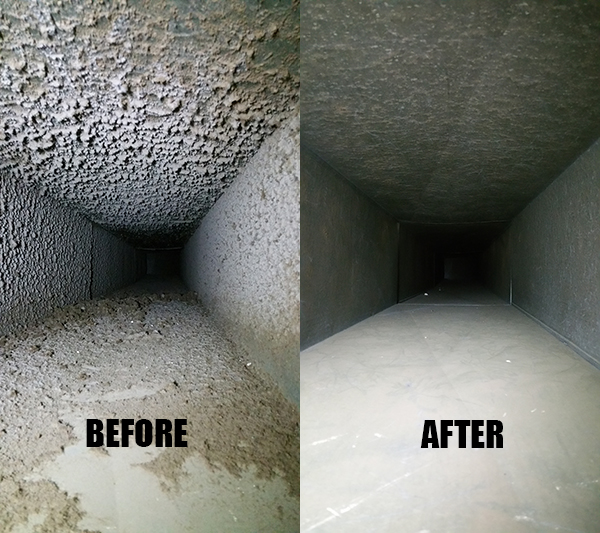
The whole system — not just the vents you can see.
Will cleaning improve my airflow?
Only if the restriction is actually dust, which it usually is not. Weak airflow is far more often undersized returns, crushed flex duct, closed dampers, a dirty blower wheel or a filter too dense for the system. A blower wheel caked with dust genuinely does move less air and does get better after cleaning. Duct walls with a dusting on them do not restrict much. If airflow is the complaint, ask for static pressure to be measured, because that number tells you where the restriction really is.
How do I know if my ducts actually need cleaning?
Take a register cover off and look, and take a photo of what you see. Some settled dust on the bottom of the duct is normal in any house. What is not normal is a visible layer coating the sides, debris you can identify like drywall dust or insulation, anything that looks like nesting material, or a smell that turns up when the system starts and fades when it stops. Ask any contractor to show you inside your own ducts before quoting, and be wary of one who quotes without looking.
Is duct sealing different from duct cleaning?
Completely, and sealing is usually the one that saves money. Cleaning removes what is inside the ducts. Sealing closes the joints and seams that are leaking conditioned air into an attic, a crawl space or a wall cavity, which in a typical house is a meaningful share of what you paid to heat and cool. If your goal is a lower bill or rooms that never keep up, sealing and airflow are the conversation. If your goal is what is coming out of the registers, cleaning is.
We are remodeling. Before or after?
After, and it is one of the clearest cases for doing it at all. Drywall dust is fine, abrasive and gets everywhere, and a system running during construction pulls it straight into the return and distributes it through the house. If work is starting, cover the returns and change the filter far more often than usual while it is going on. Then clean once the dust-producing work is finished rather than partway through, or you will be paying for it twice.