

Plumbers in Troy, Ohio: repairs, water heaters and drains
We handle water heaters, drains, leaks and sewer lines in Troy, from the office at 2950 Stone Cir Dr. The city pumps its own water out of the Great Miami Buried Valley Aquifer. We answer the line at any hour.
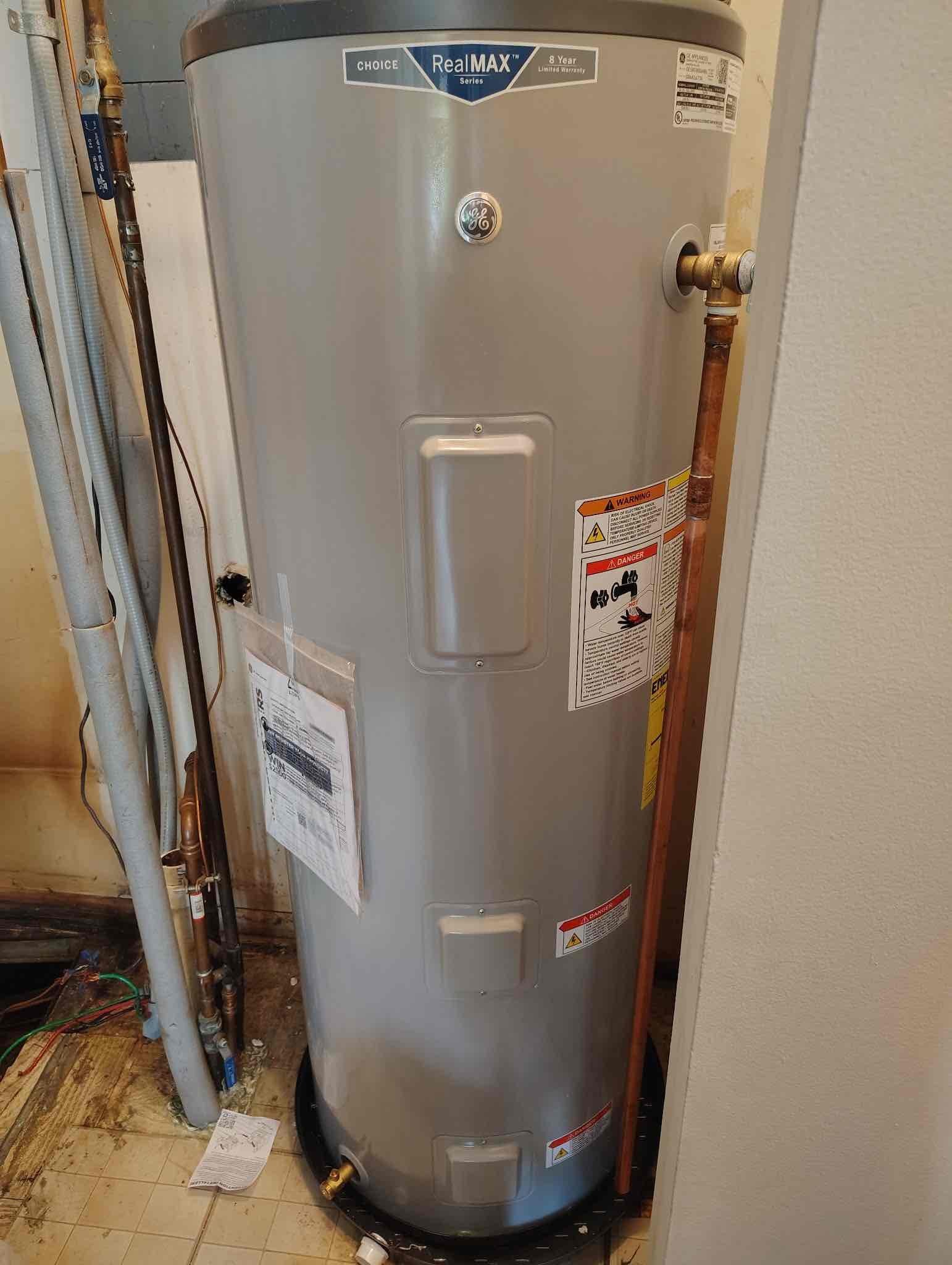
The same team you trust with your furnace now handles water heaters, drains, leaks, and sump pumps — with the same upfront pricing.
What plumbing work do you handle?
Our plumbers are licensed in Ohio, license #13557.
Where does Troy's water come from?
The city's own system. Troy pumps up to 4 million gallons a day from the Great Miami Buried Valley Aquifer through 116 miles of water main and 1,030 hydrants, into three elevated storage tanks called Herrlinger, Stanfield and Barnhart, holding 3.5 million gallons between them.
Who issues a plumbing permit in Troy?
Miami County. The City of Troy contracts building permits, which cover plumbing, out to the Miami County Building Department, while zoning permits come from the City of Troy Planning Department at 100 S. Market Street.
What should never go down the garbage disposal?
Grease first, and it is not close. It goes down warm and liquid and cools into a solid on the pipe wall a few feet along, then catches everything after it. After that: coffee grounds, eggshells, pasta and rice, and anything fibrous like celery or onion skins. A disposal that hums without turning is usually jammed rather than dead, and there is a hex socket on the underside for exactly that. If it is silent, check the reset button before assuming it needs replacing.
The water pressure has dropped. Where do I start?
First work out whether it is the whole house or one fixture, because that splits the problem in half. One fixture is almost always an aerator or a cartridge, and both are small jobs. Whole house points at the pressure regulator, a partly closed main valve, or galvanized supply pipe that has corroded closed from the inside over decades. That last one is common in pre-war houses and it is progressive, so pressure that has been slowly falling for years is telling you something different from pressure that dropped last week.
Which pipes actually freeze, and what stops it?
The ones on exterior walls, in crawl spaces, in unheated garages, and the hose bibs outside. A pipe rarely bursts where it froze; the ice blocks the line and the pressure builds between that block and a closed tap, so the split happens somewhere else entirely. On a hard freeze, open the cabinet doors under sinks on outside walls and let a pencil-width trickle run from the furthest tap. Disconnect hoses in autumn, because a hose left on a bib is the single most common frozen-pipe call we take.
How do I know the sump pump will work when I need it?
Test it rather than trusting it, because a sump pump sits idle for months and then has one job. Pour a bucket of water into the pit slowly and watch: the float should rise, the pump should start, the water should drop, and it should shut off cleanly without chattering. Do that in early spring and again before winter. The two failures worth planning for are a stuck float, which is cheap, and a power cut during the storm that needed the pump, which is what battery backup exists for.
Same trucks. Same standards. Now with pipes.
- ✓Licensed and insured plumbers on every job.
- ✓Same-day water-heater swaps in most cases.
- ✓On camera drain and sewer work you can see for yourself.
How do I book a plumber?
Call (844) 584-7399 and you get a person, or book online in about a minute. If it's an emergency, no heat or water on the floor, call rather than booking. That skips the next-day queue and goes straight to the 24/7 line.