

Tune-ups that keep breakdowns out of Waynesville
We tune up furnaces and air conditioners every season in Waynesville, Ohio. You get a written report and photos for your warranty records. Most calls get handled the same day, and someone answers the emergency line at any hour.
Seasonal furnace and AC maintenance for Waynesville homes — done right, documented for your warranty, and automatic if you're on the X-Plan.
Not a once-over. A real inspection.
What actually fails most, and would maintenance have caught it?
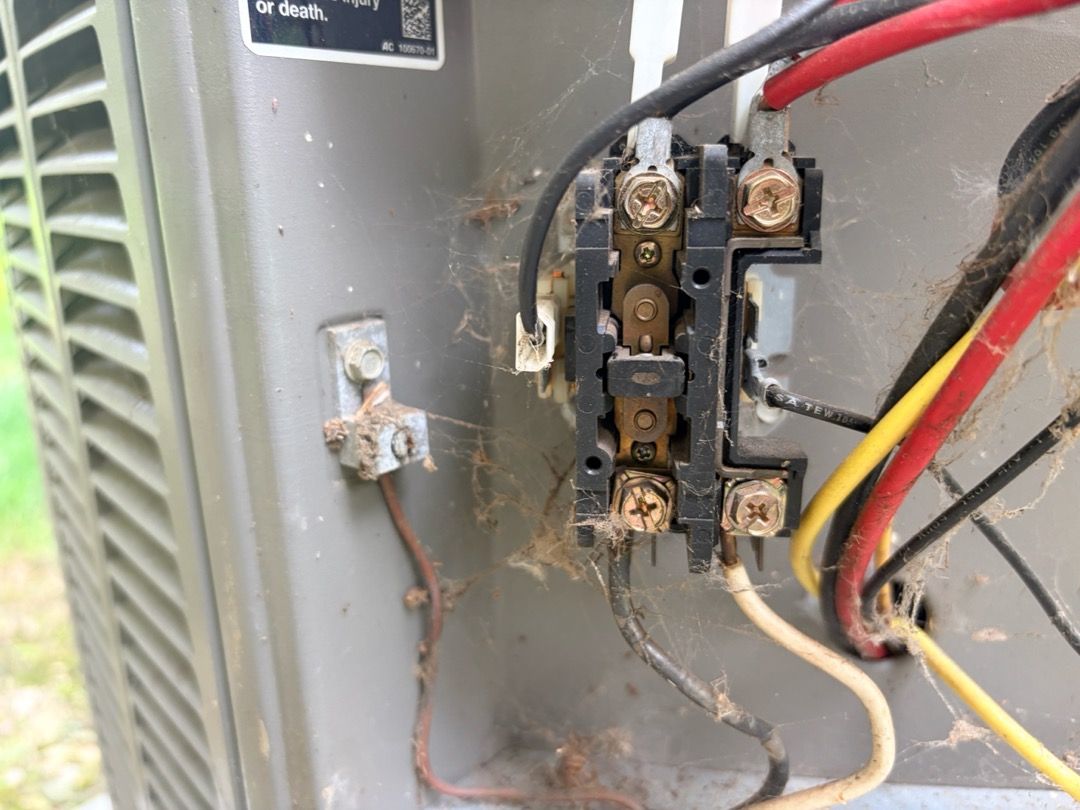
Capacitors first, by a wide margin, then contactors, flame sensors and condensate blockages. All four are cheap parts and all four are checkable, which is the honest case for maintenance: a weak capacitor reads weak before it fails and gets replaced during a scheduled visit rather than on an emergency one at a different rate. What maintenance does not predict is a compressor or a heat exchanger failing outright, and no honest inspection will promise you it does.
Why twice a year rather than once?
Because heating and cooling are two different machines sharing a cabinet, and they fail at opposite ends of the year. A spring visit is about the condenser, the refrigerant charge and the condensate drain before the first heat wave. An autumn visit is about combustion, the heat exchanger and the safeties before the first hard freeze. Doing one visit in between gets you half of each at the wrong time of year. If you only ever do one, make it autumn: a no-cool night is uncomfortable and a no-heat night can freeze pipes.
Should I cover the outdoor unit for winter?
Generally no. A heat pump must not be covered at all, because it runs all winter. An air conditioner does not need one either: the unit is built to sit outside, and a full wrap traps moisture against the metal and gives mice somewhere dry to nest in the wiring. If you want to keep leaves out of the top, a piece of plywood weighted on the fan grille does that without sealing the cabinet. Take it off before the first cooling call in spring.
The system is old. Is maintenance throwing good money after bad?
Not if it is buying you information. On a system past fifteen years, the purpose of a visit shifts: less about extending life and more about knowing where you stand before winter, so a replacement is a decision you make in September rather than one made for you in January. Ask directly for an assessment of how much life is realistically left. A straight answer to that is worth more than the tune-up itself.