

Franklin heating help, extremely fast
We repair and replace gas, electric and oil furnaces, and heat pumps in Franklin, Ohio. Any brand, any age, diagnosed and quoted before we start. Most calls get handled the same day, and someone answers the emergency line at any hour.
Furnace repair, replacement, and heat pumps from techs who've worked every kind of Miami Valley home — with a 24/7 line for the January no-heat call.
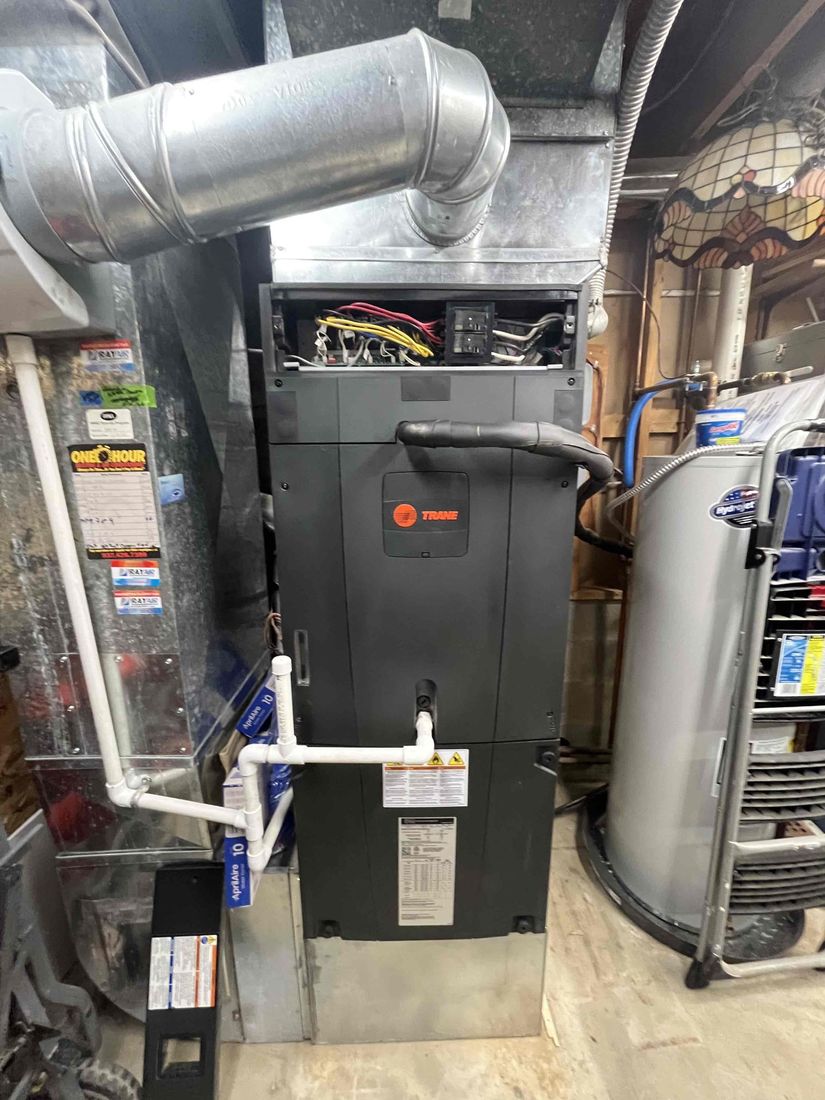
Every way a Franklin home stays warm.
Why does the furnace blow cool air when it first starts?
Because the burners light before the blower does, on purpose. The furnace gives the heat exchanger thirty seconds or so to warm up before it moves air across it, so the first air out of the vents is whatever was sitting in the ducts. If the cool air lasts longer than a minute or two, or the blower runs without the burners ever lighting, that is different: it usually means the furnace tried to fire and a safety stopped it, and it will keep retrying until it locks out.
Should I close vents in rooms I do not use?
No, and it is one of the most common ways people make a system worse while trying to save money. Your furnace moves a fixed amount of air. Closing vents does not reduce that, it raises the pressure in the ductwork, which pushes more air out through leaks in the ducts and makes the blower work against itself. On a high-efficiency furnace it can raise the temperature rise enough to trip the high limit. If some rooms genuinely need less heat, that is a balancing job at the dampers, not at the registers.
How often should I actually change the filter?
A one-inch filter every one to three months, sooner with pets or during any kind of remodel. A four or five-inch media filter every six to twelve months. The reliable test is holding it up to a light: if the light does not come through, it is restricting the return whatever the calendar says. The mistake worth avoiding is buying the densest filter on the shelf. A high-MERV filter in a system not designed for it starves the blower, and a starved blower on a furnace is how a heat exchanger cracks early.
What actually happens during a furnace tune-up?
It should be a list of measurements, not a look. Combustion analysis at the flue, gas pressure at the manifold, temperature rise across the heat exchanger, amp draw on the blower and the inducer, flame sensor cleaned and its microamp signal read, safeties tested rather than assumed, and a look at the heat exchanger itself. Ask for the numbers afterwards. A visit that produces no readings gives you nothing to compare against next year, and year-on-year comparison is most of what a tune-up is actually for.