

Cleaner ducts, cleaner air in Middletown
We clean supply ducts, returns, blower compartments and dryer vents in Middletown, Ohio. A camera goes into your ductwork before we quote anything. Most calls get handled the same day, and someone answers the emergency line at any hour.
Whole-home duct cleaning with negative-pressure equipment — and before/after photos so you can see exactly what you paid for.
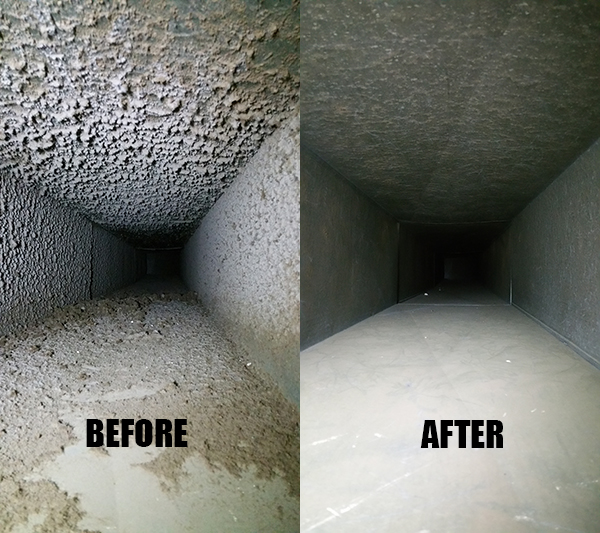
The whole system — not just the vents you can see.
What does a proper duct cleaning actually involve?
Negative pressure and agitation, in that order. A vacuum unit is connected to the system so the whole duct run is under suction, and then each branch is agitated with brushes or air whips so what is stuck to the wall lets go and gets pulled out rather than blown further in. The furnace or air handler cabinet, the blower wheel and the coil are part of the job, because a clean duct feeding a filthy blower has not achieved much. Anything advertised as a quick vacuum at each register is not this.
Does duct cleaning actually do anything?
Sometimes, and not always, and it is worth saying so before anyone books one. For a normal house with a decent filter and no particular history, cleaning the ducts is not going to transform your air or your energy bill, whatever the mailers say. Where it genuinely earns its money is after construction or a remodel, after any kind of pest or rodent activity, where there is visible dust discharging from the registers, or where the system has been running without a filter. If none of those apply, ask what the specific problem is that cleaning is meant to solve.
We just bought the house. Is it worth doing now?
It is one of the better times, for a reason that is more about information than dust. Nobody can tell you how the previous owners ran the system, whether the filter was changed, whether there was ever a pet or a smoker, or whether anything was built or demolished with the system running. Opening it up answers all of that, and a look inside a couple of registers before you commit to the full job will usually tell you whether it needs doing at all.
Is the dryer vent worth doing at the same time?
It is the one in this category with a genuine safety case, and it is often the more urgent of the two. Lint accumulates in the duct run rather than in the trap, and a restricted dryer vent is both a fire risk and the reason a load takes three cycles to dry. The signs are clothes still damp on a normal cycle, the outside of the dryer running hot, or a flap outside that no longer opens properly. Long runs and runs with several elbows need it more often than short straight ones.