

Breathe easier, Springfield
We install filtration, humidity control and ventilation equipment in Springfield, Ohio. We measure humidity, particulates and ventilation before recommending anything. Most calls get handled the same day, and someone answers the emergency line at any hour.
Filtration, purification, and humidity control for allergy season, dry winters, and everything the Miami Valley air brings inside.
Matched to your air, not a catalog.
What actually affects the air in a house?
Four things, roughly in order: moisture, ventilation, filtration and source control. Humidity that sits too high grows things and too low irritates everything. Ventilation decides whether what you generate indoors gets diluted or accumulates. Filtration catches particles, and only particles. Source control means the cooking, the cleaning products, the attached garage and the pets that put things into the air in the first place. Most air quality money gets spent on the third one when the answer was one of the other three.
What is the difference between CO and CO2 in a house?
Carbon monoxide is the dangerous one and comes from incomplete combustion: furnaces, water heaters, fireplaces, a car in an attached garage. It has no smell and it needs alarms. Carbon dioxide is what people exhale, and while it is not toxic at household levels, a room where it climbs is a room that is not being ventilated, so it is a useful proxy for stale air. Alarms are for the first. The second is a ventilation question rather than a safety one.
Everything is static and the wood floors are gapping.
That is winter dryness, and it is a real air quality problem rather than an inconvenience. Cold outdoor air carries almost no moisture, so every air change in January leaves the house drier. Below about 30% relative humidity you get static, cracked skin, irritated airways and gaps opening in flooring and trim. A whole-house humidifier on a humidistat handles it more evenly than portable units. Do not simply run it high: too much moisture in a cold snap condenses on windows and inside exterior walls.
Do air purifiers actually work?
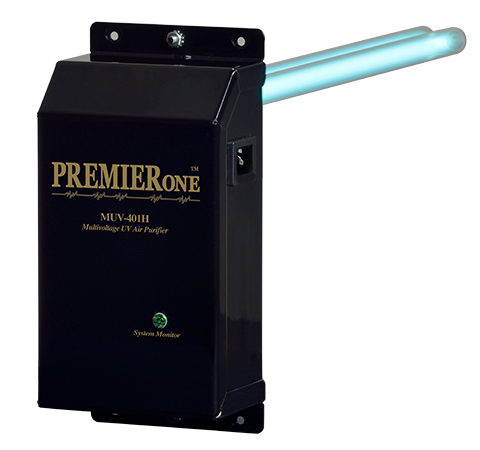
The ones that move enough air through a good enough filter do, within the room they are in. That last part is where expectations go wrong: a portable unit sized for a bedroom does very little for a house. Whole-house media filtration built into the ductwork treats everything the system circulates, which is a different scale of job. Look for how much air a unit actually moves rather than the room size printed on the box, and be skeptical of anything whose main claim is ozone or ions.