

Cleaner ducts, cleaner air in Warren County
We clean supply ducts, returns, blower compartments and dryer vents in Warren County, Ohio. A camera goes into your ductwork before we quote anything. Most calls get handled the same day, and someone answers the emergency line at any hour.
Whole-home duct cleaning with negative-pressure equipment — and before/after photos so you can see exactly what you paid for.
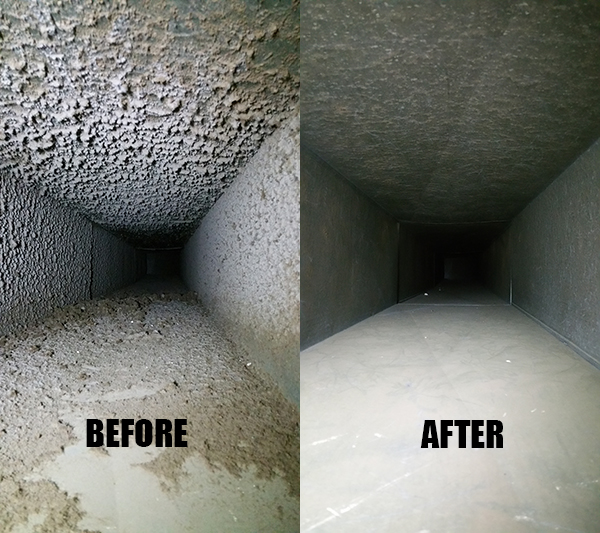
The whole system — not just the vents you can see.
We just bought the house. Is it worth doing now?
It is one of the better times, for a reason that is more about information than dust. Nobody can tell you how the previous owners ran the system, whether the filter was changed, whether there was ever a pet or a smoker, or whether anything was built or demolished with the system running. Opening it up answers all of that, and a look inside a couple of registers before you commit to the full job will usually tell you whether it needs doing at all.
Is the dryer vent worth doing at the same time?
It is the one in this category with a genuine safety case, and it is often the more urgent of the two. Lint accumulates in the duct run rather than in the trap, and a restricted dryer vent is both a fire risk and the reason a load takes three cycles to dry. The signs are clothes still damp on a normal cycle, the outside of the dryer running hot, or a flap outside that no longer opens properly. Long runs and runs with several elbows need it more often than short straight ones.
Can I just clean the vents myself?
You can, and it is worth doing, as long as you know what it does and does not achieve. Pulling the register covers, washing them, and vacuuming as far into the boot as the hose reaches removes the dust you can see and the pet hair that collects right at the opening. What you cannot reach is the trunk line, the branch runs and the blower, which is where anything that actually matters accumulates. Treat it as housekeeping rather than as a substitute.
We are remodeling. Before or after?
After, and it is one of the clearest cases for doing it at all. Drywall dust is fine, abrasive and gets everywhere, and a system running during construction pulls it straight into the return and distributes it through the house. If work is starting, cover the returns and change the filter far more often than usual while it is going on. Then clean once the dust-producing work is finished rather than partway through, or you will be paying for it twice.